|
By Sam Chu Lin
KTTV Fox 11 News, Los Angeles 
During a relaxing moment, a reporter colleague joked, "I think I know only two things about Asian Americans. The Chinese helped to build the Transcontinental Railroad, and Japanese Americans were put into the camps during World War II." In a more serious tone of voice, he quickly added, "I'm sure they've done a lot more for this country, but I really can't pinpoint what those contributions are."
Following a recent visit to a medical clinic, a nurse that I have known for many years curiously asked, "Why do Chinese, who consider themselves Americans, insist on using Chinese calligraphy above English words in identifying their businesses?" Cautiously phrasing her words, she attempted to answer her own question. "Many of them are probably new immigrants, and they're still going through the transition period of becoming Americans. It's impressive to see how hard they work, but it's disturbing when they have a
take-it-all' attitude and fail to give back.'"
On returning from one of my Wen Ho Lee-related news assignments, a television segment producer commented, "So many Asian Americans support the former Los Alamos scientist, but I still think he might have been a spy for China. What do you think?" I quickly responded, "The judge in the case apologized to Lee for the way he was treated. He was kept in solitary confinement for nine months. I've covered this story extensively, and many of his supporters --- including Asian Americans, feel he was racially stereotyped, denied due process, and there was a media frenzy to convict him."
After reading some Wen Ho Lee stories that I had recommended, the writer/TV producer stopped me in a hallway one day and exclaimed, "Thanks for those articles! I now have a better understanding of what happened. If the Chinese got the nuclear secrets from us, there were plenty of other sources that weren't even checked out."
My co-worker was surprised to learn that many Chinese Americans across the country were fearful they could be stereotyped and suspected of being a spy for China as well. When a crippled American reconnaissance plane made an emergency landing on China's Hainan Island following an air collision, another friend said he was disgusted to learn that some radio disc jockeys had telephoned Chinese American restaurants and joked ethnically about the incident.
At its 2001 national convention in Washington, D.C., the Committee of 100 announced at a news conference the disturbing findings of a new national survey that analyzed the feelings of mainstream Americans towards Chinese and other Asian Americans. Among its conclusions, many people believe: Asian Americans are more loyal to their mother countries. They stick to themselves as a community. Many of those surveyed say they would not vote for an Asian American running for President of the United States. It was disappointing, but it was no surprise to hear some of my colleagues and friends offer a critical assessment of Chinese and other Asian Americans. Those feelings simply reflected the conclusions of the Committee of 100's national study.
Many mainstream Americans know very little about Asian Pacific Americans and the challenges they have faced. As far as many of these critics are concerned, they think, "Chinese and other Asian Pacific Americans should be more thankful to this country for the opportunities they have received, and that they should illustrate this by giving back."
On my visit to Washington, D.C., ironically I found a partial answer to this dilemma. During a lull in the Committee of 100's activities, I visited the Smithsonian Institution and viewed the "On Gold Mountain" exhibit, the story of the Chinese American experience in America. The curator told me this was the first time such an exhibit had ever been put on display at the prestigious museum and that it was breaking attendance records.
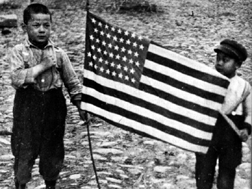
"Leaving their villages in China, they journeyed far, with only each other and the power of memory.... remembering families an ocean apart...remembering how to make a home on the soil under their feet....With spirit and strategy they fought for their place in America." -Narrator
Murals and historical artifacts illustrated how early Chinese immigrants fought America's discriminatory Exclusion Laws for sixty-one years and helped to pave the way for others to succeed. Archival photographs and uniforms worn by veterans help to demonstrate the patriotism of Chinese Americans. They had fought for the Red, White, and Blue at Gettysburg in America's Civil War to the jungles of Vietnam. And these American citizens have helped to build a "better America" with their contributions in many arenas including the scientific, educational, and political fields.

Apparently the public is eager to learn more about this community, and a few examples help to illustrate that point.
With the help of Committee of 100 members, PBS documentary producer and TV host Bill Moyers is completing a new TV series about Chinese Americans. Author Iris Chang, likewise a Committee of 100 member, has also written a new book about Chinese American heroes and how they have given back to this country. It's now being edited for publication.
It was a memorable experience when I delivered a speech to about a thousand teachers at a convention of the National Education Association in Washington, D.C. As I wrapped up my remarks, hundreds of educators rushed the stage to request a list of Chinese American contributors. One teacher said, "There's so little material about Chinese American heroes." The classroom instructors were so anxious for the information, they waited until the list was duplicated and distributed.
During a question and answer period, the audience roared with laughter when a group of Florida teachers admitted they didn't know that a Chinese American horticulturist helped to develop their state's frost-resistant citrus fruit and paved the way for the state to compete against California. They were also astonished to learn that a Chinese American cinema photographer won two Oscars for filming the Academy Award winning motion pictures "Hud" and "The Rose Tattoo."
After I put together a series of reports for KNX, the CBS radio station in Los Angeles, to commemorate the May observance of Asian Pacific American Heritage month, a reporter at the station reacted, "It's fascinating to know that a Chinese American patented the process to make evaporated milk. These people have really touched our lives. Every time I drink a cup of coffee and pour in powdered creme, I'll remember that."
He added, "Everybody knows the Chinese invented the firecracker and rocket. I'm delighted to learn that there are Chinese American astronauts who go into space, and that a Chinese American scientist helped to develop the fabric to make the space suits."
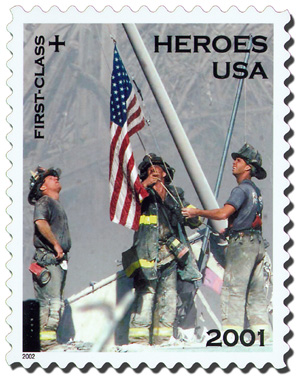
Following the September 11 tragedies, the U.S. declared war on terrorism. It was an event Chinese and other Asian Americans have played an important role.
In a live broadcast, I went on television that day at a Los Angeles fire station to report that a local fire and rescue team was being dispatched by air to New York City to lend assistance, and that Asian Americans were part of that team.
At Ground Zero, a Chinese American Port Authority officer had gone into the WTC to evacuate people. He became trapped himself, but he was freed from the ruins. In another incident, a young Chinese American man, who worked at the WTC, returned to the towers to help rescue people, but he was killed.
Weeks later, I was on hand with a television crew to videotape and interview a group of runners as they arrived at Los Angeles International Airport. The last sprinter was the sister of a Chinese American airline stewardess who was on board a hijacked jetliner that was bound from Boston to Los Angeles. The finish of the cross-country race was symbolic of the completion of that flight.
Matt Fong, former California State Treasurer and a Committee of 100 member, has his own memories of that fateful September 11 day. He grimaced as he watched on television as one of the skyjacked planes crashed into the Pentagon and the offices he once occupied. Before his withdrawal, Fong was in the process of being nominated by President Bush as Under Secretary of the Army. Many Army personnel he had worked with, including a general, were killed.
The former California State Treasurer said, "So many people have sacrificed to make this country great and to give us the freedoms that we have. It's time for all us to stand up and to be counted. "Two Asian Americans, one Chinese and the other a Japanese American, are now in President Bush's cabinet. It demonstrates if we're involved in our government and our society, positive things can happen."
|