
Experience the thrill of swimming with a favorite ocean animal during an OMNIMAX journey under the sea. Dolphins, a 2000 Academy Award
Nominee from MacGillivray Freeman Films, sweeps viewers into the ocean to dance with these intelligent, majestic creatures. The film opens Jan. 4, 2002, at the St. Louis Science Center, 5050 Oakland Ave., and continues through May 2, 2002.
Dolphins is narrated by actor Pierce Brosnan and features songs and performances by Sting. The presenting sponsor of Dolphins in St. Louis is Sonic Drive-Ins of Greater St. Louis. 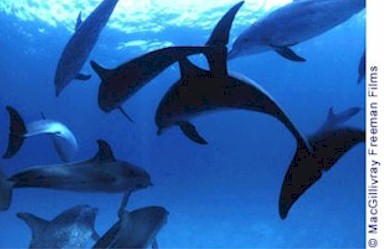
The film introduces viewers to the complex communication patterns used by these underwater mammals. Dolphins introduces just three of over 40 dolphin species: Atlantic spotted dolphins, dusky dolphins and bottlenose dolphins.
Scientists began studying the Atlantic spotted dolphins' global distribution, their associations with one another and their behavior. They are even identifying individual dolphins by gender and the pattern of their spots. Beginning at about age four, young dolphins in this species begin developing black spots on their light underside and white spots on their dark topside. The older the dolphin, the more spots.
Dr. Kathleen Dudzinski, featured in the film, is working to understand the communicative lives of these animals. The more she knows about the animals, the better she can search for clues and correlations between certain sounds dolphins make and their behaviors. 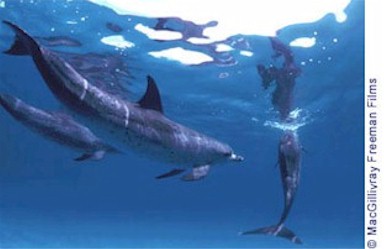
Atlantic spotted dolphins are relatively small compared to other dolphins, at about six feet long and weighing approximately 200 pounds at adulthood.
Also featured in the film is Dr. Bernd Würsig who knows more about dusky dolphins than anyone in the world. He's been studying these acrobatic marvels since the 1970s. His research takes him from Argentina to New Zealand, as duskies live in the temperate waters of the Southern Hemisphere. 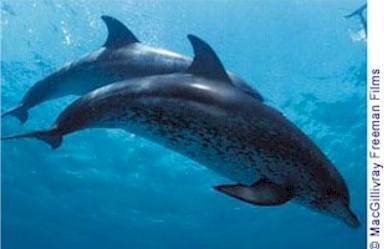
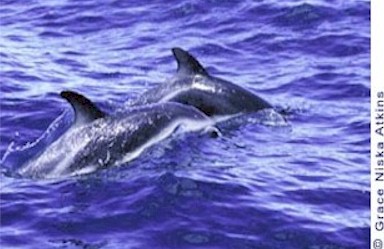
Duskies are smaller than many dolphins, reaching a length of five to six feet. They have very short beaks and distinctive black and white coloring, but their most noted characteristic is their highly acrobatic leaps. In addition to helping propel them more quickly through the water, duskies may be leaping for their dinner. By leaping high, they may locate flocks of birds feeding on schooling fish, sometimes miles away.
The 1960s television show "Flipper," as well as oceanariums that care for captive dolphins, have made the bottlenose the most recognized dolphin species in the world. In fact, bottlenose dolphins inhabit temperate and tropical waters of almost every ocean, including the Mediterranean Sea and Gulf of Mexico. Their popularity and anatomical "smile" cause many people to think dolphins are merry, friendly creatures eager to interact with humans. In some respects this is true. Bottlenose dolphins are highly social and, in captivity, tend to be eager to interact with humans and are more easily trained than other animals. Even in the wild, there have been many documented accounts of bottlenose dolphins seeking human companionship, but generally speaking, they far prefer the company of their own kind. 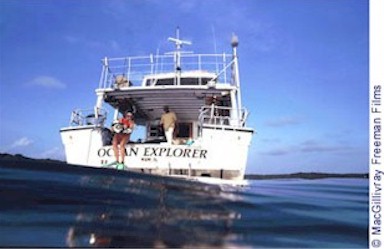
Bottlenose dolphins are much bigger than spotteds and duskies. At about 10 feet long and 600 pounds, dolphins can be quite aggressive with one another and with other species, including humans.
In Dolphins, viewers meet Dean Bernal, a marine naturalist in the West Indies, who has befriended a wild, bottlenose dolphin named JoJo. It is unknown why JoJo chooses to live alone rather than with a group of dolphins, but instead he has chosen Bernal as his family.
Dolphins stresses scientists concern for the well-being of dolphins while taking an exciting voyage under the sea through OMNIMAX technology. OMNIMAX is the world's largest high-fidelity motion picture system. The images are 10 times the standard 35mm frame and are projected on a four-story-high domed screen. The theater features a 15,000-watt sound system. 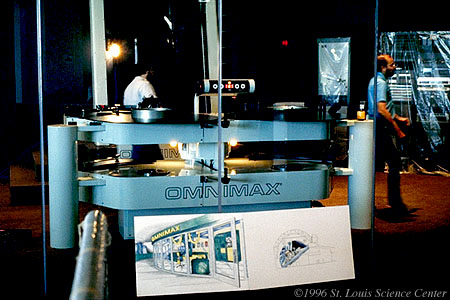
Opening weekend of Dolphins will be filled with tropical-style fun and games for the entire family to take a break from the cold of winter. Visitors can register to win a trip for four to Sea World/Dolphin Cove in Orlando including airfare on Southwest Airlines.
For daily show times, call 314/289-4444, toll-free 800/456-SLSC or visit the Science Center's web site at www.slsc.org. Tickets: adults, $7; children/senior adults, $6. Science Center members and groups receive special discounts. 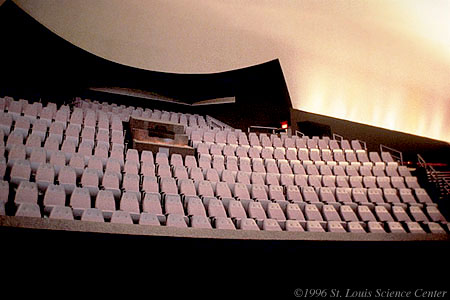
|


