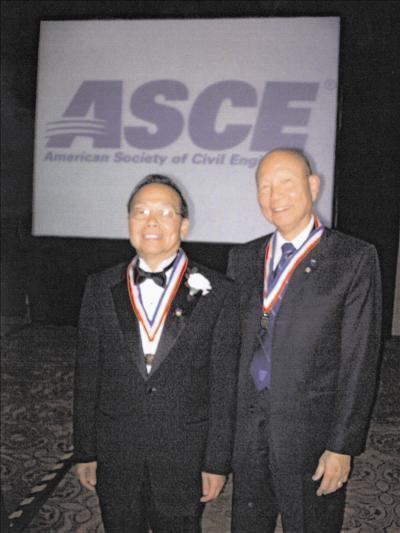
【時報訊】美國土木工程師學會於2007年十一月之137屆年會上頒獎密蘇里大學鄭毅教授榮譽會員,這項榮譽限授於土木工程領域貢獻最為卓著的傑出人士,選擇的標准極為嚴謹,由每七千五百名以上會員中才得提名一位,提名最後再由委員會根據符合多項標準的審核與評論而投票選出。自1835年美國全國土木工程師學會成立至今(2007年)僅有565人獲此殊榮。以今年為例,由十四多萬會員中挑選了十名榮譽會員。任教於密蘇里大學Rolla校區的鄭毅教授乃是聖路易和堪薩斯兩地區土木工程師協會會員中獻身教育而獲此殊榮之第一人。
鄭毅於1960年獲臺灣國立成功大學土木系學士,並於伊利諾大學獲土木碩士後,即參與芝加哥高樓及核子發電廠設計工作。於1966年取得威斯康辛大學博士後,受聘為密蘇里羅拉分校助理教授,1966年升任副教授,1974年任正教授,1987年密蘇里大學校董事會敦聘為董事會講座教席,此講座教席乃全校四所分校中最崇高的教授榮譽與地位。
2000年鄭博士退休,董事會授予榮譽講座退休教授。在美國國外鄭毅博士自1981年起曾被四所名校授予榮譽教授席。美國國家科學基金會曾24次邀請他參加代表團與其他國家進行科研合作,其中鄭毅教授七次擔任代表團主席。鄭教授多次主持地震工程的國際會議,及舉辦多次最前瞻性的課題為工程師講解進修。許多基金會為他的科學研究提供經費。單美國國家科學基金會就提供有35次之多。
作為一個土木工程領域的學術領導人,鄭教授擔任35個專業組織和學會的主席及會員,其中十二個是美國土木工程師學會的委員會。鄭教授曾任第一屆美國土木工程師學會分析與計算技術管理委員會主席,他創立新興計算技術委員會以及結構控制委員會。他還協助美國結構穩定研究評議學會,首創了地震荷載作用下穩定問題委員會,並擔任該委員會第一屆主席。在企業界鄭教授經常為七家機構提供咨詢服務,其中包括美國洛薩摩斯國家實驗室。
鄭教授非常熱誠地推動中國大陸與臺灣的學術研究與交流。他與美國國家科學基金會地震工程負責人受邀前往臺灣,為國科會、教育界、經濟部及交通部等首要人員講解如何成立國家地震研究中心及其未來對臺灣安全和經濟之貢獻。他早在1981即前往中國大陸講學八周,並獲贈哈爾濱建築工程學院(現併為哈工大)榮譽教授,推動大陸、臺灣、美國三邊合作研究。
在計算理論應用於大型複雜結構的動力分析領域中,鄭教授是公認的創始人之一。他前瞻性的研究成果使工業界認識到自動化計算方法在今後土木工程中有極其重要地位。尤有進者,他還把多年在計算理論的研究成果拓寬結構優化和智能結構等新的領域中。鄭教授在此一領域中是享譽世界之著名專家。
鄭教授發表了280多篇學術論文和文集,其中包括兩本教科書 ------ 矩陣結構動力分析和結構動力分析。他計劃在2008年年初出版智能結構及地震控制一書。及出版另一專業著作 -----重抗震結構優化設計。在土木工程專業領域中,鄭教授曾多次獲獎,其中包括美國土木工程師學會授予他的兩次最新技術獎。
FRANKLIN Y. CHENG ELECTED ASCE HONORARY MEMBERThe American Society of Civil Engineers recently recognized the accoinplishnients of Franklin Y. Cheng, PhD., P.E., Hon.M.ASCE by electing him to Honorary Membership. The Induction Ceremony will take place at the black lie gala banquet, held in conjunction with the Society 137th Annual Civil Engineering Conference, on November 3 at the Buena Vista Palace in Orlando, Florida.Dr. Cheng was honored for his significant contributions to earthquake structural engineering on optimization, control, and structural dynamics, for his distinguished leadership and service in the international engineering community and as a well-respected educator, consultant, author, editor, and member of numerous professional committees and delegations.His cutting edge research helped recognize the vital importance of the possibilities of automatic computing in the future of civil engineering. He was one of the pioneers in allying computing expertise to the design of large and complex structures against dynamic loads. His research expanded over the years to include the important topics of structural optimization and the design of smart structures; In fact, he is one of the foremost experts in the world on the application of structural dynamics and optimization to the design of structures.Due to the high caliber and breadth of his research expertise, Dr. Cheng has been regularly invited to serve on the review panels for the National Science Foundation, hence setting the direction of future structural research. In addition, he has been instrumental in helping the National Science Foundation develop collaborative research programs with Europe, China, Japan and Korea.Major industrial corporations and government agencies have sought Dr. Cheng𠏋 consultancy. He has consulted with Martin Marietta Energy Systems, Inc.; Los Alarnos National Laboratory; Buchmuellor, Whitworth and Faust, Inc.; Kjaima Corporation; Arnold and O㷧heridan Engineers; Martin & Huang International, Inc.; and Ames, Torkelson and Nugent Architects and Engineers.
An important educator, Dr. Cheng joined the University of Missouri-Rolla as Assistant Professor in 1966. In 1987 the Board of Curators of the University appointed him Curator's Professor, the highest professorial position in the system comprising four campuses. He has been Curator Professor Emeritus of Civil Engineering since 2000. He received four honorary professorships from China and chaired seven of his 24 National Science Foundation (NSF) delegations to various countries for research cooperation. His led as director of international earthquake engineering symposia and contributed numerous state-of-the-art short courses. He has warranted grants from several funding agencies including 35 from NSF.As a leader in the field, he has served as either chairman or member of 37 professional societies and committees - among them 12 are of ASCE. He was the first chair of the Technical Administrative Committee on Analysis and Computation and initiated Emerging Computing Technology Committee and Structural Control Committee. He also initiated and chaired the Stability Under Seismic Loading Task Group of the Structural Stability Research Council (SSRC).Dr. Cheng is the author of more than 280 publications, including two textbooks on Matrix Analysis of Structural Dynamics and Dynamic Structural Analysis and as well as two forthcoming books on Smart Structures and Structural Optimization. He has received numerous awards, including two times of the ASCE State-of-the-Art of Civil Engineering Award.
Honorary Membership is the highest award the Society may confer, second only to the title ofASCE President. Honorary Members on this prestigious and highly selective list have attained acknowledged eminence in a branch of engineering or its related arts and sciences. There are now 565 individuals who have been elected to this distinguished grade of membership since 1853.
|